
Cardiology
Overview
Cardiology focuses on the diagnosis, treatment, and prevention of diseases related to the heart and blood vessels. It plays a critical role in managing conditions that affect circulation, heart rhythm, and overall cardiovascular health.
Our department provides comprehensive cardiac care ranging from early detection and risk assessment to advanced medical and surgical interventions. Patients are evaluated using a combination of clinical expertise and diagnostic tools to identify conditions such as coronary artery disease, heart failure, arrhythmias, and hypertension.
With a strong emphasis on preventive care and timely intervention, our approach ensures better heart health and reduced risk of complications. By integrating modern technology with a multidisciplinary care model, we aim to deliver accurate diagnosis, effective treatment, and long-term cardiac management.

Our Specialties
Our Cardiology department offers specialized care across a wide spectrum of heart-related conditions and treatments.
Non-Invasive Cardiology
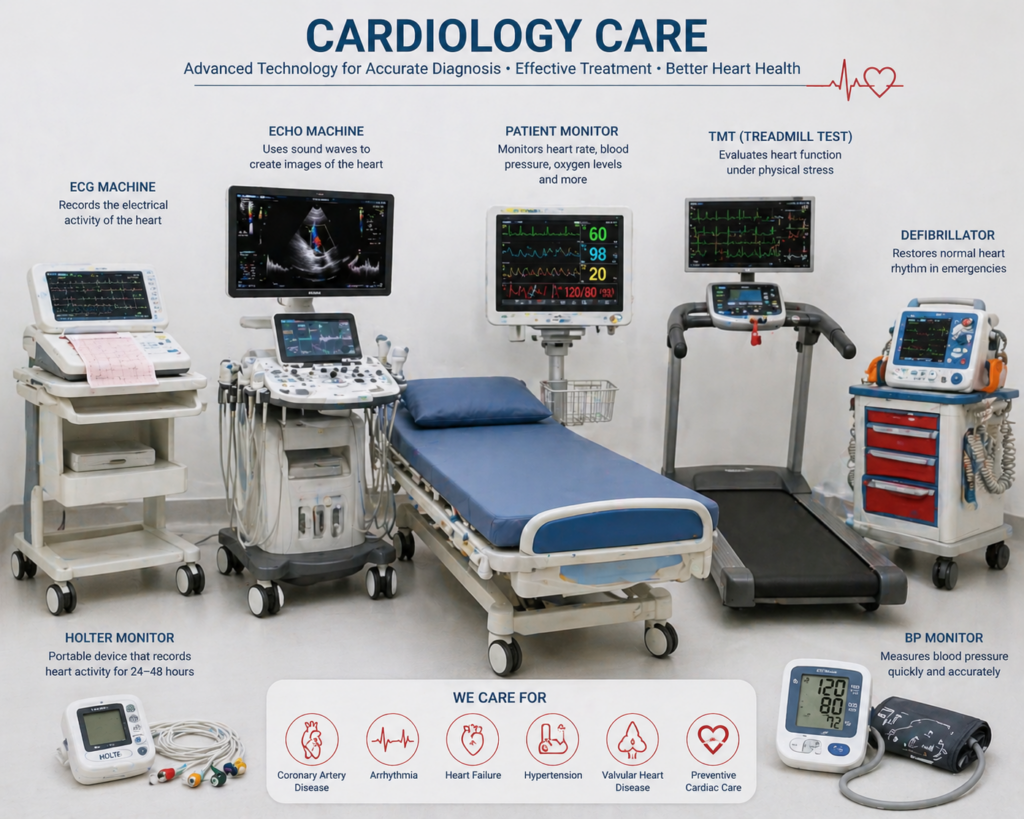
Evaluation of heart health using diagnostic methods such as ECG, echocardiography, stress testing, and Holter monitoring for early detection of cardiac conditions.
Interventional Cardiology
Minimally invasive procedures such as angiography and angioplasty to diagnose and treat blocked or narrowed blood vessels.
Electrophysiology & Heart Rhythm Disorders
Diagnosis and treatment of irregular heart rhythms (arrhythmias) using advanced techniques such as ablation and device-based therapies.
Coronary Artery Disease Management
Comprehensive care for conditions like angina and heart attacks, focusing on restoring blood flow and preventing further complications.
Heart Failure Management
Long-term care for patients with weakened heart function, including medication management, monitoring, and lifestyle support.
Cardiac Surgery (CTVS)
Advanced surgical procedures such as coronary artery bypass grafting (CABG), valve repair/replacement, and correction of structural heart defects.
Pacemaker & Device Implantation
Implantation of pacemakers, defibrillators, and cardiac resynchronization devices to regulate heart rhythm and improve function.
Preventive Cardiology
Focus on reducing risk factors such as high blood pressure, cholesterol, diabetes, and lifestyle-related issues through early intervention and counseling.
Cardiac Emergency Care
Immediate treatment for heart attacks, cardiac arrest, and other life-threatening cardiac conditions with rapid response systems.
Structural Heart Disease Treatment
Management of congenital and acquired heart defects, including minimally invasive corrective procedures.
Cardiac Rehabilitation
Post-treatment recovery programs designed to improve heart function, physical fitness, and overall quality of life.
Vascular & Peripheral Artery Care
Treatment of diseases affecting blood vessels outside the heart, including peripheral artery disease and circulatory disorders.
Technologies & Infrastructure
Advanced Cath Lab Facilities
Equipped for complex cardiac procedures such as angiography, angioplasty, and interventional treatments.
Cardiac Surgery Operation Theatres
Advanced surgical setups for performing complex heart surgeries with precision and safety.
Non-Invasive Cardiac Diagnostics
Includes echocardiography, treadmill testing (TMT), and Holter monitoring for early and accurate detection.
Advanced Imaging & Monitoring Systems
Real-time monitoring of heart function using modern technologies to support timely decision-making.
Coronary Care Unit (CCU)
Dedicated intensive care unit for continuous monitoring and management of critically ill cardiac patients.
Multidisciplinary Cardiac Team
Collaboration between cardiologists, cardiac surgeons, and specialists for comprehensive patient care.
Our Experts

Dr. J. Das
Psychiatry

Dr. Ankita
Obst. & Gynae

Dr. Rahul Arya
Gastroenterologist

Dr. Ashish
General Surgery
Request a Callback
Frequently Asked Questions
You should consult a cardiologist if you experience symptoms such as chest pain, shortness of breath, palpitations, dizziness, or have risk factors like high blood pressure or diabetes.
Common conditions include coronary artery disease, heart failure, arrhythmias, hypertension, and structural heart problems.
Angiography is a diagnostic procedure to check blood flow in the arteries, while angioplasty is a treatment to open blocked arteries using a balloon or stent.
Yes, many heart conditions can be prevented or managed through lifestyle changes, regular check-ups, and early treatment.
No, many cardiac conditions can be managed with medication and minimally invasive procedures. Surgery is recommended only when necessary.
It is a supervised program that helps patients recover after heart treatment through exercise, diet, and lifestyle changes.
Yes, cardiac care is available 24/7 for emergencies such as heart attacks and critical conditions.